.jpg)


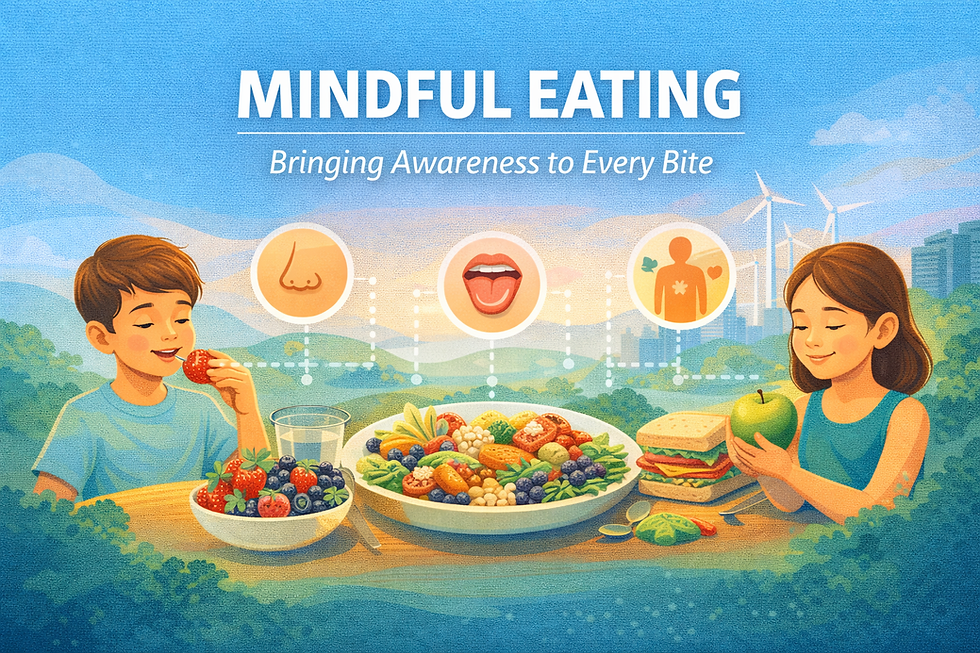
Mindful Eating: Bringing Awareness to Every Bite
- Mindful Eğitim ve Sanat Derneği
- Dec 31, 2025
- 2 min read

Mindful Eating: Bringing Awareness to Every Bite
In our fast-paced daily lives, eating often becomes an automatic activity. We eat while checking our phones, rushing between tasks, or thinking about what comes next. Mindful eating invites us to slow down and reconnect with food, our bodies, and the present moment.
Mindful eating is not about dieting or changing what you eat. It is about how you eat — with awareness, curiosity, and without judgment.
What Is Mindful Eating?
Mindful eating means paying full attention to the experience of eating. This includes noticing:
The taste, texture, and smell of food
Hunger and fullness cues
Thoughts and emotions related to eating
By becoming more aware, we can develop a healthier and more respectful relationship with food and our bodies.
Why Is Mindful Eating Important?
Mindful eating supports both physical and emotional well-being. When we eat mindfully, we are more likely to:
Recognize when we are truly hungry or full
Reduce emotional or stress-related eating
Enjoy food more and feel satisfied with smaller portions
Improve digestion by eating more slowly
For students and teachers, mindful eating can also support better focus, emotional regulation, and energy levels during the school day.
Mindful Eating in Daily Life and at School
Mindful eating can be practiced anywhere — at home, in the cafeteria, or during a short break at work or school.
In educational settings, even small moments of awareness can make a difference:
Taking a few deep breaths before eating
Eating without screens for a few minutes
Noticing how food affects mood and concentration
These simple practices help students build self-awareness and self-regulation skills that extend beyond the lunch table.
A Simple Mindful Eating Practice
You can try this short practice with a snack or a meal:
Pause before eating. Take one deep breath.
Look at your food. Notice its colors and shape.
Smell it. What do you notice?
Take a small bite. Eat slowly and notice the taste and texture.
Check in with your body. Are you still hungry? How do you feel?
There is no right or wrong experience — the goal is simply to notice.
Mindful Eating for Children and Students
For children, mindful eating can be introduced in a playful and gentle way:
Comparing textures (crispy, soft, juicy)
Describing flavors with words
Turning eating into a short “attention game”
These activities help children develop awareness, patience, and respect for their bodies.
Final Thoughts
Mindful eating reminds us that eating is not just a routine task, but an opportunity to care for ourselves. By bringing awareness to everyday meals, we can support well-being, reduce stress, and build healthier habits — one bite at a time.
At Mindful Horizons, we believe that small mindful moments, practiced consistently, can create meaningful change in education and daily life.
Stay Connected with Mindful Horizons
Follow Mindful Horizons on social media to explore more mindfulness practices, educational resources, and project updates.
📷 Instagram:@ka220mindfulhorizon
Join us as we share practical tools, short videos, and inspiring content to support well-being and mindful learning in everyday life and education.